Structural analysis / Verification
Coolant Stand Load Verification
A welded steel stand had to be shown to hold 10,000 lbf before it went out on the floor. The analysis returned a minimum factor of safety of 0.507, and the work was deciding whether to believe it.
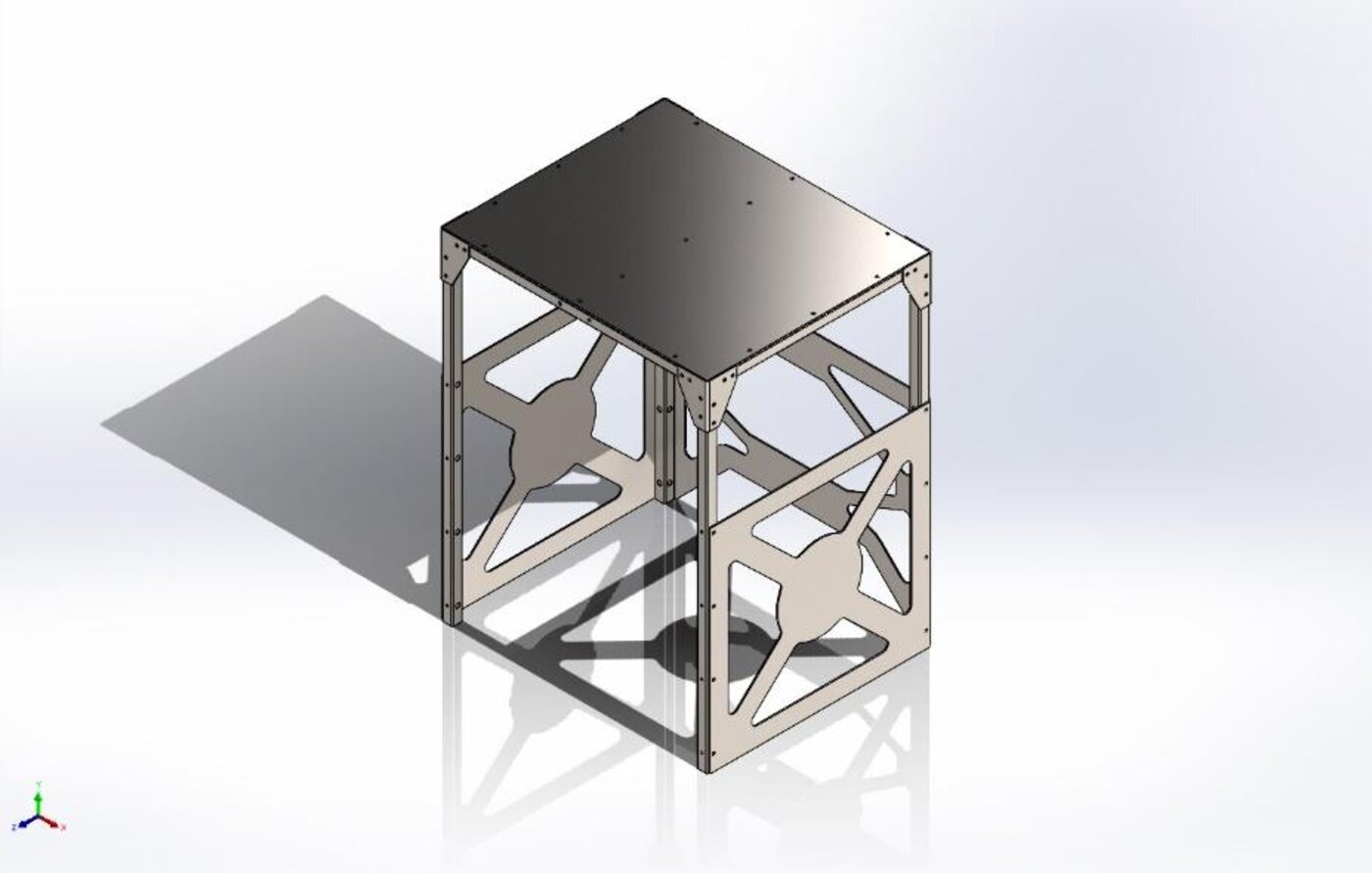
Verifying someone else's design
A welded steel stand, designed by a colleague to carry coolant tanks, had to be shown to hold 10,000 lbf before it went out on the floor. I was asked to run the analysis, and it was the first one I had done myself.
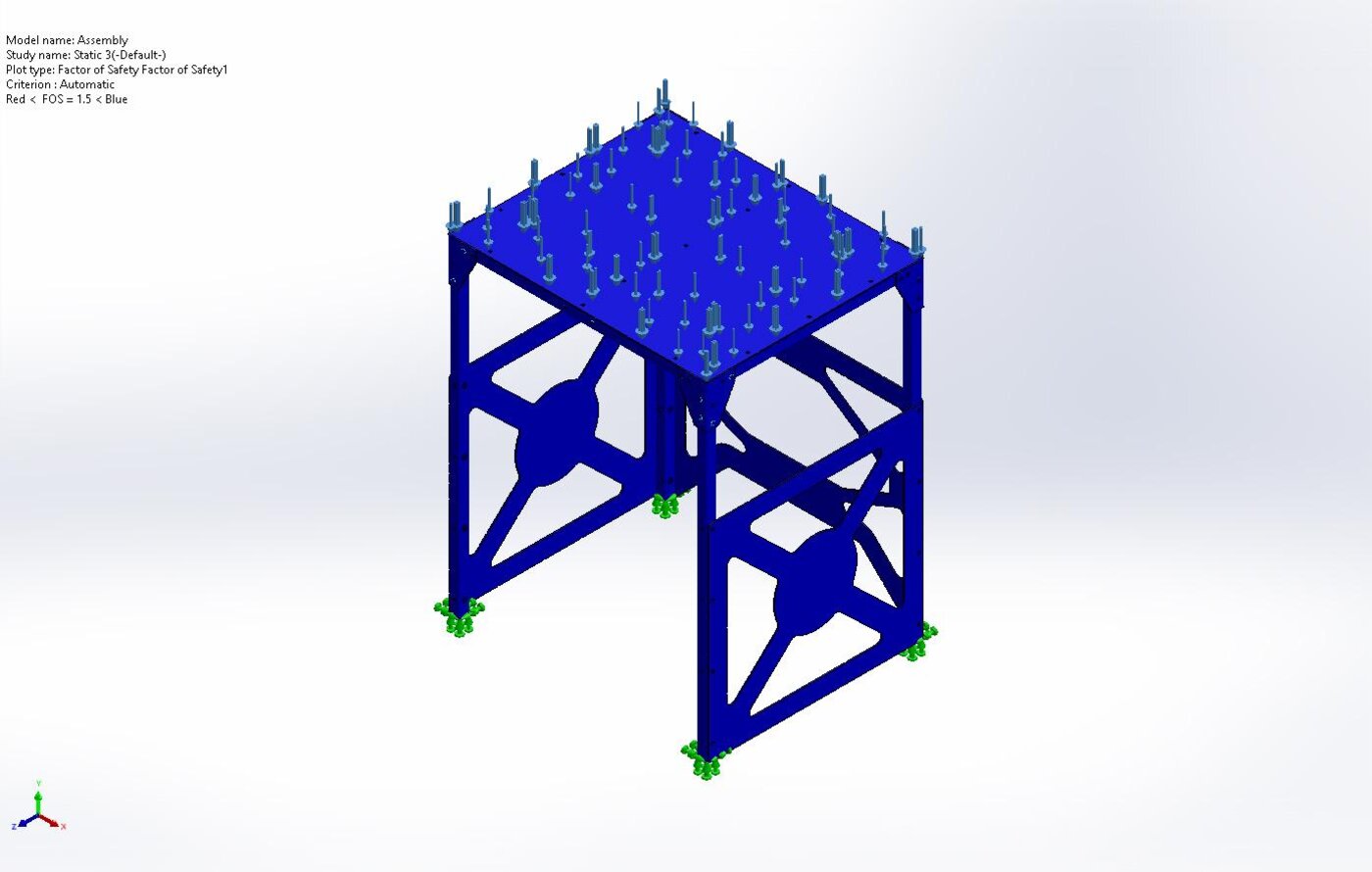
The study was a linear static case in SolidWorks: the load applied vertically across the top plate, bonded contacts and rigid connectors standing in for the welds and bolts, and a curvature-based mesh of roughly a million nodes.
- Load case
- 10,000 lbf vertical, applied across the top plate
- Method
- Linear static, bonded contacts and rigid connectors
- Result
- About 4 mm deflection, primary structure well under 100 MPa
- Outcome
- Submitted to EHS for on-floor approval and passed
01 / The number that did not fit
A minimum factor of safety of 0.507
The factor-of-safety plot came back blue across the whole visible structure, meaning everything shown sat above 1.5. The results table reported a minimum of 0.507.
Both cannot describe a part that is fine, so the question was which one to believe. The minimum sat on a single node on an anti-crush sleeve, a spacer whose job is to take bolt preload so the joint is not crushed, rather than a member carrying load. It also sat at a bonded contact on a constrained cylindrical feature, which is a known place for a model to invent stress the real part never sees.
02 / Result
The number described the model, not the stand
The structure itself carried the load with a factor of safety above ten, and most of it sat under 100 MPa, comfortably below the yield strength of the steels involved. The analysis went to EHS for on-floor approval and passed.
A solver returns a number whether or not that number means anything. Working out which ones described the part and which described the way I had set it up was the actual task.